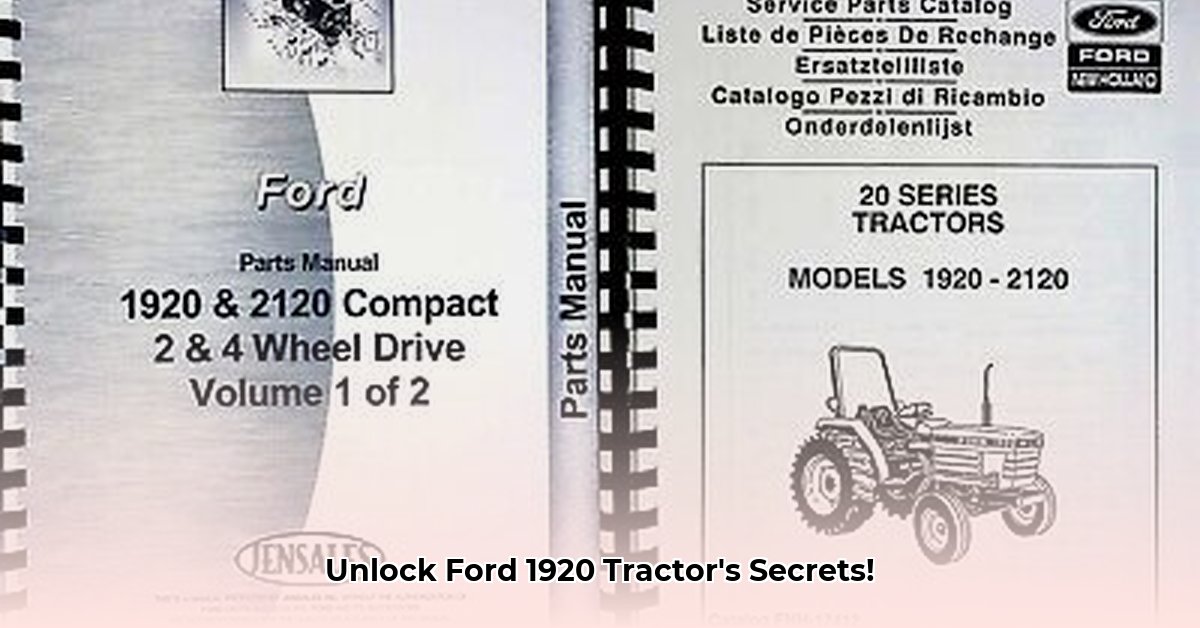
Navigating the World of 1920s Ford Tractor Parts
Restoring a vintage Fordson tractor from the 1920s is a rewarding project, a journey back to the golden age of agriculture. But sourcing the correct parts presents a unique set of challenges. Original parts are incredibly scarce, making locating them a time-consuming and often frustrating experience. This scarcity drives up demand, impacting both pricing and availability. Further complicating matters, the market is fragmented, with parts spread across various online marketplaces, specialized forums, and independent suppliers. How can you successfully navigate this complex landscape and locate the necessary components for your restoration project? The answer lies in mastering the use of Ford 1920 tractor parts diagrams. For additional diagrams, check out this helpful resource: Ford Tractor Diagrams.
Mastering the Art of Ford 1920 Tractor Parts Diagrams: A Step-by-Step Guide
Ford 1920 tractor parts diagrams are not merely illustrations; they are essential tools for successful restoration. Learning to effectively utilize these diagrams can transform a seemingly daunting task into a manageable and rewarding process. Let's explore a step-by-step approach:
1. Decoding the Diagram: Understanding the Visual Language
Many parts diagrams employ "exploded views," presenting all the components disassembled to clearly showcase their relationship and assembly order. Each part is assigned a unique number, which is cross-referenced in a parts list. Pay close attention to symbols; they provide crucial information on part function and connectivity. Consider the diagram a visual instruction manual, guiding you through each step of the assembly process. Are you ready to decode the visual language of your parts diagram?
2. Pinpointing the Problem Part: Precise Identification
Once you've identified a faulty or missing part, accurately finding its replacement relies on precisely identifying it within the diagram and parts list. Carefully compare the visual representation in the diagram with the actual part, cross-referencing the part number multiple times to ensure accuracy. A small mistake here can lead to ordering the wrong part, causing further delays and frustration. Have you verified your part number three times before ordering?
3. The Online Parts Hunt: Leveraging Digital Resources
Armed with the correct part number and a detailed description (often included in the parts list alongside the diagram), you can start your online search. Utilize the part number to refine your searches on online marketplaces like eBay, specialized vintage tractor forums, and dedicated parts suppliers. Remember to always inspect images carefully; a clear picture can reveal more about a part's condition and suitability than written descriptions alone. Are you maximizing your use of online resources to locate the parts you need?
4. Assessing Part Quality: Original, Reproduction, and Aftermarket Options
The availability of Ford 1920 tractor parts includes original parts, reproductions, and aftermarket alternatives. Original parts are highly desirable but extremely difficult to find and often expensive. Reproduction parts offer a viable alternative, although quality can vary widely depending on the manufacturer. Aftermarket options may exist but always verify compatibility with your tractor model before purchasing. Your parts diagram can help you compare dimensions and specifications, aiding in making informed decisions. Do you understand the nuances of original, reproduction, and aftermarket parts?
5. Troubleshooting with Visual Aids: Problem Solving Made Easier
Encountering a mechanical issue? Your parts diagram provides a visual guide to diagnose the problem. By examining the visual relationship between various components, you can often identify the root cause more efficiently than relying solely on guesswork. This visual approach can dramatically reduce time and effort spent on repairs. Have you utilized your diagram to assist in troubleshooting?
6. Sourcing Your Diagrams: Locating Your Roadmap
Finding the parts diagram itself may require some effort. Original owner's manuals are valuable but rare. Online retailers specializing in vintage parts may offer digital copies or printed reproductions. Don't underestimate the power of online forums; they often contain shared resources and helpful advice from experienced restorers. Are you aware of multiple ways to access parts diagrams?
Real-World Examples: Concrete Applications of Parts Diagrams
Let's illustrate the process with a practical example. Suppose your carburetor requires a new gasket. Your diagram shows the gasket as part #47. This number becomes your search term, allowing you to effectively search online marketplaces and specialized suppliers. The diagram may also provide dimensions or material specifications, helping you to choose the best replacement.
Continuing Your Journey: Resources and Further Exploration
The vintage Ford tractor restoration community is a vibrant network of enthusiasts ready to share their knowledge and experience. Online forums and clubs are invaluable resources for finding parts, seeking advice, and connecting with like-minded individuals. Engaging with these communities can significantly enhance your restoration experience.
Key Takeaways:
- The market for Ford 1920 tractor parts is characterized by high demand and fragmented supply.
- Effective use of parts diagrams is crucial for successful part identification and sourcing.
- Online communities and specialized suppliers are valuable resources for locating hard-to-find components.
This guide empowers you to confidently navigate the intricate world of Ford 1920 tractor parts diagrams, transforming them into essential tools for successful restoration. Remember, restoring a classic machine is a journey, and mastering these diagrams is a significant step towards achieving your goals.